Understanding Hemangiosarcoma in Dogs: Symptoms, Diagnosis, and Treatment Options
Your Journey Through This Guide
- The Sneaky Nature of Hemangiosarcoma: Why It's So Hard to Catch Early
- Where Does Hemangiosarcoma Like to Hide?
- Getting a Diagnosis: The Tests Your Vet Will Likely Recommend
- Facing the Treatment Maze: What Are Your Actual Options?
- The Prognosis: What Does "Average Survival Time" Really Mean?
- Living With and Managing Hemangiosarcoma: A Day-to-Day Guide
- Answering Your Burning Questions (The FAQ You Actually Need)
- Making the Final Decision: When is it Time?
- Wrapping This Up: Your Takeaway Mindset
Let's be honest, hearing the word "cancer" from your vet is terrifying. And when it's a word like hemangiosarcoma, it feels like the ground just disappears from under you. You're probably searching frantically online right now, trying to make sense of it all. I get it. The information out there is scary, technical, and sometimes just plain confusing.
This isn't a dry medical journal article. Think of this as a long chat with someone who's been down this road (metaphorically speaking) and has talked to experts, combed through the research, and wants to give you the straight story. We're going to talk about what hemangiosarcoma really is, what signs you might have missed, what your options are, and the tough decisions that come with them. No sugar-coating, but also no unnecessary doom and gloom. Just the facts, some context, and a roadmap for what comes next.
What exactly are we dealing with? In the simplest terms, hemangiosarcoma (HSA) is a nasty, aggressive cancer that starts in the cells that line blood vessels. It's like the body's own plumbing system turning against it. These tumors are mostly made of faulty blood vessels, which is why they're so fragile and prone to bleeding. It's almost exclusively a dog disease; you hardly ever see it in cats or people.
The Sneaky Nature of Hemangiosarcoma: Why It's So Hard to Catch Early
This is the part that frustrates vets and devastates owners. Hemangiosarcoma is a master of disguise. In its early stages, it often gives no clear signs at all. Your dog might seem perfectly fine, maybe a little less energetic on some days, but you'd chalk it up to aging or a lazy afternoon. The tumor grows silently, often tucked away in an organ with lots of room to expand, like the spleen or the heart.
The problems start when one of two things happens: the tumor gets big enough to disrupt the organ's function, or, more dramatically, it ruptures and causes internal bleeding. That's when you go from "my dog seems a bit off" to a full-blown emergency.
So, what are the red flags? The symptoms can be vague, which is why you need to trust your gut as a pet owner.
- The Slow Burn Signs: Lethargy (just seeming "tired" all the time), weakness, reduced appetite, weight loss for no obvious reason, and pale gums. These are subtle. Your dog isn't screaming in pain; they're just... fading a little.
- The Emergency Signs: This is the scary part. If a tumor bleeds, even a little, you might see a distended or painful abdomen (if it's in the spleen or liver), sudden collapse, extreme weakness, rapid breathing, or those pale gums turning almost white. This is an immediate, drop-everything-and-go-to-the-vet situation. The Cornell University College of Veterinary Medicine stresses that acute collapse is a major presenting sign.
Here's my personal opinion after reading countless stories: the worst thing about hemangiosarcoma isn't just its aggressiveness; it's the whiplash. One week your dog is playing fetch, and the next you're in an ER facing impossible choices. It feels profoundly unfair.
Where Does Hemangiosarcoma Like to Hide?
This cancer has favorite spots. Knowing where it commonly shows up helps explain the symptoms.
- The Spleen: This is the #1 location. About 50% of splenic tumors in dogs are hemangiosarcoma. The spleen is a blood-filled organ, so it's prime real estate for a blood vessel tumor. A ruptured splenic tumor is a classic cause of "hemoabdomen" (blood in the belly).
- The Heart: Specifically, the right atrium or pericardial sac. This is a particularly dangerous spot because even a small tumor or bleed can interfere with the heart's ability to fill and pump. Symptoms often look like heart disease: cough, difficulty breathing, weakness, collapse.
- The Skin and Subcutaneous Tissue: Believe it or not, there's a form that appears on or just under the skin. The good(ish) news? The dermal (skin) form is often less aggressive and can sometimes be cured with wide surgical removal alone. The subcutaneous (under the skin) form behaves more like the internal kind.
- Other Sites: Liver, lungs, bone, brain—it can spread almost anywhere. When it spreads, it's called metastasis, and that's the biggest challenge in treating hemangiosarcoma.
Getting a Diagnosis: The Tests Your Vet Will Likely Recommend
You can't diagnose this from Google. If your vet suspects hemangiosarcoma, they'll start putting pieces of the puzzle together. It's rarely just one test.
The Diagnostic Pathway: It usually starts with a physical exam and history, then moves to imaging (ultrasound is key), then blood work, and finally, a biopsy for confirmation. It's a step-by-step process to rule other things out and pinpoint the problem.
Imaging is the Window: An abdominal ultrasound is arguably the most important tool. A skilled veterinary radiologist can often see the tell-tale signs of a mass on the spleen or liver, and even more importantly, they can look for free fluid (blood) in the abdomen. An ultrasound of the heart (echocardiogram) is essential if heart involvement is suspected. X-rays are useful for checking the lungs for signs of spread.
Blood Work Tells a Story: There's no single blood test for hemangiosarcoma. But vets look for clues. Severe anemia (low red blood cell count) from bleeding is a big one. They might also check clotting times. Sometimes, they use a test called a "PCV/TS" on abdominal fluid if there's any, to confirm it's blood.
The Biopsy is the Final Answer: To know for sure if it's hemangiosarcoma and not a more benign mass (like a hematoma), a sample of the tissue needs to be looked at under a microscope by a pathologist. This can be done with a fine needle aspirate (less invasive but sometimes inconclusive) or a surgical biopsy (more definitive). The pathology report is the gold standard.
I remember a vet tech telling me, "We hate seeing that 'grape-like' cluster of blood vessels on ultrasound. It's so often the bad guy." It's a vivid and sadly accurate description.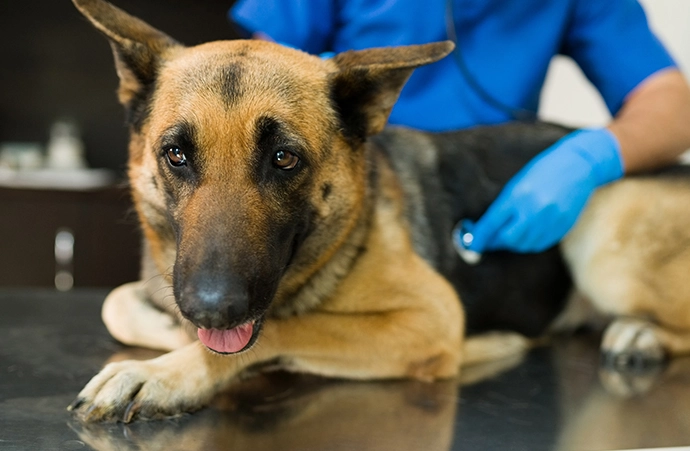
Facing the Treatment Maze: What Are Your Actual Options?
Okay. You have the diagnosis. Now what? This is where you have to have a brutally honest conversation with your vet and with yourself. Treatment for hemangiosarcoma is not about finding a cure in the traditional sense for most dogs. It's about buying good quality time. The goal shifts to controlling the cancer, preventing bleeds, and keeping your dog comfortable and happy for as long as possible.
Let's break down the options. I've put them in a table because it helps compare the tough trade-offs.
| Treatment Option | What It Involves | The Goal & Potential Benefit | The Downsides & Realities |
|---|---|---|---|
| Surgery Alone | Removing the primary tumor (e.g., splenectomy to remove the spleen and mass). | Immediate relief from the risk of a fatal bleed from that tumor. It's often an emergency procedure to save life. | Does nothing for microscopic spread that's already happened. Average survival time post-surgery alone is often quoted as 1-3 months. The cancer almost always comes back elsewhere. |
| Surgery + Chemotherapy | Surgery to remove the primary mass, followed by a series of chemo drugs (like doxorubicin). | This is the current standard of care for dogs that are good candidates. It aims to attack any cancer cells that have spread. The American College of Veterinary Internal Medicine (ACVIM) oncology specialists consider this the best protocol for extending life. | Can significantly extend survival to an average of 6-9 months, sometimes longer. Chemo in dogs is generally milder than in humans (fewer severe side effects), but it's still a commitment of time, money, and emotional energy. It's about quality of the extra time. |
| Chemotherapy Alone | Using drugs to try to shrink or control the tumor(s) without surgery. | An option if surgery is too risky (e.g., poor health, tumor location). May help stabilize the disease temporarily. | Less effective than the combined approach. The primary tumor remains, carrying a constant risk of rupture and bleed. |
| Palliative Care & Hospice | Focusing solely on quality of life: pain management, drugs to support appetite, possibly low-dose steroids, and managing bleeds with transfusions if they occur. | To provide comfort and a peaceful end-of-life experience without aggressive treatment. It accepts the prognosis and focuses on love and comfort. | Does not attempt to fight the cancer. Survival time is typically short (weeks). It's the hardest but sometimes most compassionate choice, especially for older dogs or when finances are a barrier. |
See what I mean about tough choices? There's no single right answer. It depends on your dog's age, overall health, the exact location and stage of the hemangiosarcoma, your financial situation, and your personal philosophy.
Chemo for dogs isn't what you see on TV. Most dogs don't lose their hair or get violently ill. But it's not nothing.
The Cost Factor: Let's Talk About Money
I hate that this is a consideration, but we have to be real. Treating hemangiosarcoma can be expensive. Emergency surgery can cost thousands. A full course of chemotherapy can add several more thousand. It's a major financial decision for most families.
Talk to your vet about estimates. Look into pet insurance (though it won't cover pre-existing conditions), care credit, or charitable organizations that help with vet bills. Don't feel guilty if finances limit your options. Palliative care is a valid, loving choice. Providing a pain-free, comfortable end is a tremendous gift.
The Prognosis: What Does "Average Survival Time" Really Mean?
You'll hear numbers. 1-3 months with surgery alone. 6-9 months with surgery and chemo. Maybe 12+ months for some lucky dogs with early, dermal-only hemangiosarcoma.
Here's the critical thing: These are averages. They are statistics. Your dog is not a statistic. Some dogs succumb in weeks despite treatment; others defy the odds and live well over a year with good quality of life. The range is huge. The goal of treatment is to push your dog into the longer end of that range while keeping them happy.
The biggest factor? Whether the cancer has already spread (metastasized) at the time of diagnosis. Once it's in the lungs or other organs, the prognosis becomes much more guarded. That's why staging tests (like chest X-rays) are so important before making big decisions.
Living With and Managing Hemangiosarcoma: A Day-to-Day Guide
So you've chosen a path. How do you live with this? The emotional toll is heavy. You become hyper-vigilant.
- Monitor, Don't Obsess: Keep a casual eye on gum color (they should be pink, not white or pale). Note your dog's energy levels and appetite. Weigh them regularly if you can. A journal can help you spot subtle trends.
- Activity Modifications: Your vet will likely recommend restricting vigorous activity. No more hard running, jumping, or rough play. The goal is to minimize the risk of trauma that could cause a fragile tumor to bleed. Leash walks only.
- Diet and Supplements: There's no magic diet for hemangiosarcoma. Feed a high-quality, palatable food to maintain weight and strength. Some owners explore supplements under their vet's guidance, but be wary of unproven "miracle cures." The American Animal Hospital Association (AAHA) recommends discussing any supplements with your vet first, as some can interfere with treatments.
- Quality of Life is the Boss: This becomes your guiding star. Is your dog eating? Are they interested in their favorite things (a snuggle, a short walk, a car ride)? Are they free of significant pain? There are helpful scales like the HHHHHMM scale that can help you assess this objectively when emotions are running high.
Answering Your Burning Questions (The FAQ You Actually Need)
Making the Final Decision: When is it Time?
This is the hardest part of the journey. With a disease as unpredictable as hemangiosarcoma, the end can come suddenly from a major bleed, or more gradually as the cancer spreads.
If you've chosen palliative care, you're looking for a consistent decline in quality of life—not eating, unable to get up for water, showing signs of pain that medication can't control, or having repeated, distressing bleeds.
If you've chosen aggressive treatment, you're hoping for a long plateau of good life, followed by a relatively short decline. The decision often comes when the cancer returns despite chemo, or a new, inoperable tumor appears.
Talk to your vet. They can help you assess. But you know your dog best. That look in their eyes, the loss of their spark—you'll see it. Making the decision to say goodbye before a catastrophic, painful emergency is often the final, most loving act you can perform. It's about preventing suffering, not giving up.
There's no perfect time. But there can be a good and peaceful goodbye.
Wrapping This Up: Your Takeaway Mindset
Dealing with a hemangiosarcoma diagnosis is a marathon, not a sprint. It's emotionally draining, financially taxing, and just plain hard.
Arm yourself with knowledge from reliable sources like your vet and the professional organizations linked here. Be a partner in your dog's care. Ask questions. Understand the odds but remember your dog is an individual. Focus on quality of life—theirs and yours during this process. Celebrate the good days. Really be present for them.
And please, don't go through it alone. Lean on your vet team, talk to friends, or find online support groups of people who truly understand what you're facing. The journey with hemangiosarcoma is undeniably difficult, but the love you share with your dog through it is what makes every single extra day worth fighting for.