Your Complete Guide to the Rottweiler Dog Breed: Facts, Care & Myths
Your Quick Guide to Rottweiler Insights
- Where Did This Breed Even Come From? A Dash of History
- Beyond the Looks: The Real Rottweiler Temperament
- The Nitty-Gritty: Caring for a Rottweiler Dog
- Health & Lifespan: What You Need to Watch For
- Training & Socialization: The Make-or-Break Foundation
- Is a Rottweiler Dog Right For YOU? The Honest Checklist
- Answering Your Burning Questions (FAQs)
- Final Thoughts: A Breed of Contradictions and Profound Rewards
Let's cut right to the chase. The image that pops into most people's heads when you say "Rottweiler dog" is probably a big, black-and-tan, powerful-looking guard dog with a maybe-a-bit-scary reputation. I get it. Media hasn't always been kind to this breed. But having spent years around dogs, and knowing a few fantastic Rottweiler owners personally, I can tell you that picture is incomplete, and honestly, a little unfair.
This isn't just another generic breed profile. If you're here, you're likely past the initial "are they dangerous?" Google search and digging deeper. You might be seriously considering bringing one of these magnificent animals into your life, or you're a current owner looking for better insights. My goal here is to walk you through everything—the good, the challenging, and the often-misunderstood—about living with a Rottweiler dog. We'll strip away the myths and talk about the real, day-to-day reality.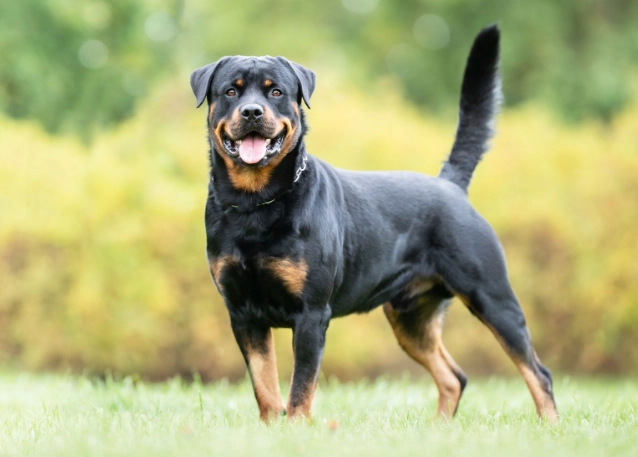
Where Did This Breed Even Come From? A Dash of History
You can't understand a Rottweiler dog without knowing where it came from. Their story starts not on a police K-9 unit, but in the bustling market towns of southern Germany, in a place called—you guessed it—Rottweil. Back in the Roman era and through the Middle Ages, their ancestors were drove dogs. Their job? Herding livestock to market and, crucially, guarding the butcher's money pouch tied around their necks. Think about that for a second. They were trusted with the day's cash earnings. That requires immense steadiness, confidence, and a natural protective instinct, but not indiscriminate aggression.
That history of being a working partner, a thinking guardian rather than just a fighter, is baked into their DNA. The American Kennel Club (AKC) breed standard describes them as "calm, confident, and courageous," with a "self-assured aloofness" toward strangers. That last bit is key. They're not supposed to be everyone's best friend on the street, and that's by design. For more detailed historical standards, the official AKC Rottweiler page is an excellent primary source.
Beyond the Looks: The Real Rottweiler Temperament
Okay, let's talk personality. This is where people get tripped up. If you want a dog that greets every visitor with wagging tail and kisses, a Rottweiler dog might disappoint you. They tend to be reserved. They assess. They watch. In my friend's house, their Rottie, Bruno, will calmly place himself between the family and a new guest, just observing. Once he gets the "all clear" from his owners, he might wander over for a pat, or he might just go lie down. He's not hostile, just… vigilant.
A Crucial Warning About Source
This reserved nature makes them highly susceptible to poor breeding and bad ownership. A Rottweiler from irresponsible breeders who prioritize aggression or don't care about stable temperaments is a disaster waiting to happen. Conversely, a well-bred Rottweiler from health-tested, temperament-screened parents (check organizations like the Rottweiler Club of America) is a world apart. Never, ever cut corners here. The cheapest puppy is often the most expensive mistake.
With their family, it's a different story. The loyalty is profound. They are often "velcro dogs," following you from room to room. They can be wonderfully silly and playful in private. Many are surprisingly sensitive and do not respond well to harsh treatment. Yelling at a Rottweiler will shut them down or create resentment, not respect. They work with you, not for you.
The Nitty-Gritty: Caring for a Rottweiler Dog
This isn't a low-maintenance breed. Let's break down what you're signing up for.
Exercise & Mental Stimulation: Not Just a Walk in the Park
A bored Rottweiler is a destructive Rottweiler. We're talking about a powerful dog bred for work. A 20-minute walk twice a day? Forget it. That's just a warm-up. They need serious daily exercise: long brisk walks, hiking, jogging (once fully grown), or play sessions in a secure area. But physical exercise is only half the battle.
Mental stimulation is non-negotiable. These are smart dogs that need jobs. Obedience training, advanced tricks, nose work, puzzle toys, cart-pulling (a traditional Rottweiler activity!), or dog sports like obedience or rally are perfect. Training isn't just about commands; it's about building a communication channel and tiring out their brain. A tired Rottweiler is a good Rottweiler.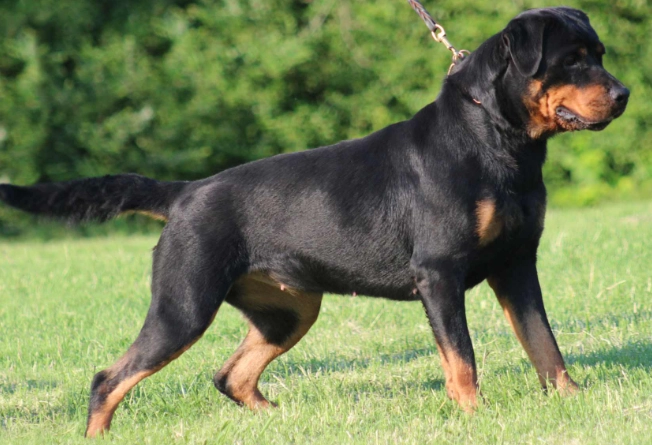
Quick Mental Workout Ideas:
- Food Puzzles: Ditch the bowl. Use Kongs, snuffle mats, or DIY puzzles.
- Name Game: Teach them the names of their toys. "Go get your ball!" "Where's your rope?"
- Short Training Sessions: 5-10 minutes, 2-3 times a day, working on a new trick or polishing an old one.
- "Find It": Hide treats or their favorite toy around the house or yard.
Nutrition & Grooming: Surprisingly Straightforward
For a big dog, they're relatively easy to groom. That short, double coat sheds—a lot, especially seasonally—but a weekly brush with a slicker brush or undercoat rake manages it well. Baths only as needed. The big focus is on nails (keep them short to avoid joint stress) and ears (check weekly).
Nutrition is critical. You're feeding a large, active breed prone to joint issues. A high-quality, large-breed puppy formula is essential for controlled growth, then a premium adult formula. Look for foods with named meat proteins (chicken, beef, fish) as the first ingredients. Consult your vet, and be wary of fillers like corn and wheat. Overfeeding is a major sin; a lean Rottweiler is a healthier Rottweiler. The American Veterinary Medical Association (AVMA) has great resources on life-stage nutrition that apply perfectly here.
Health & Lifespan: What You Need to Watch For
Let's be honest: giant breeds often have shorter lifespans. The average for a Rottweiler dog is 8-10 years. Some beat the odds, but you need to be proactive. Reputable breeders test their breeding stock for a range of genetic conditions. You MUST ask for these health clearances (OFA or PennHIP for hips/elbows, cardiac exam, eye exam).
| Common Health Concern | What It Is | Prevention/Management |
|---|---|---|
| Hip & Elbow Dysplasia | Malformation of the joints, leading to arthritis and pain. | Buy from breeders with excellent hip/elbow scores. Keep puppy lean during growth. Provide joint supplements (glucosamine/chondroitin) as adults. |
| Heart Conditions (Aortic Stenosis) | A narrowing of the heart's aortic valve. | Breeder should have cardiac clearances. Annual vet checkups with stethoscope exam. Watch for lethargy or fainting. |
| Cancers (Osteosarcoma, Lymphoma) | Unfortunately common in the breed. | No guaranteed prevention. Know the signs: lameness, lumps, sudden weight loss, lethargy. Early detection is key. |
| Gastric Dilatation-Volvulus (Bloat) | Life-threatening stomach twisting. A deep-chested breed risk. | Feed 2-3 smaller meals a day, not one large one. Avoid vigorous exercise for an hour before and after eating. Know the emergency signs. |
That list looks scary, I know. But forewarned is forearmed. A good vet relationship is worth its weight in gold. Get pet insurance early, before any conditions appear. Trust me, for a breed like this, it can save you from heartbreaking financial decisions later.
Training & Socialization: The Make-or-Break Foundation
This is the most important chapter. A Rottweiler dog without training and socialization is like a car without brakes—powerful and dangerous. It's not the dog's fault; it's an owner's failure.
Socialization doesn't mean letting every person and dog mob your puppy. It means controlled, positive exposure. From 8 to 16 weeks (the critical window), expose them to: different surfaces (grass, tile, gravel), sounds (vacuum, traffic, kids playing), people (men with hats, people with umbrellas, children), and other healthy, vaccinated dogs in safe settings like puppy classes. The goal is to teach them that the world is not scary. A poorly socialized Rottweiler can become fearful, and fear can manifest as aggression.
Obedience Training should start the day you bring your puppy home. Use positive reinforcement—treats, praise, toys. They are eager to please when they understand what you want. Focus on the basics first: name recognition, sit, down, come, stay, and loose-leash walking. "Come" is arguably the most important command you'll ever teach. Enroll in a puppy class with a trainer experienced in large, powerful breeds. Avoid any trainer who promotes dominance theory or harsh corrections; it will backfire spectacularly with this breed.
A Quick Rant on Leash Manners
You cannot have a 100+ pound dog pulling you down the street. It's unsafe and miserable. Teach loose-leash walking from day one. A front-clip harness can be a great tool for management while you train. The goal is a dog that walks politely beside you, not one that forges ahead. It makes walks enjoyable instead of a battle of strength you will eventually lose.
Is a Rottweiler Dog Right For YOU? The Honest Checklist
Let's get personal. This breed isn't for everyone. Be brutally honest with yourself.
A Rottweiler might be a good fit if you:
- Have experience with large, powerful dogs.
- Lead an active lifestyle and can commit to 1-2 hours of combined physical/mental exercise daily.
- Have a secure, fenced yard (6-foot minimum, they can be climbers).
- Are committed to lifelong, consistent training and socialization.
- Want a loyal, protective family companion, not a social butterfly.
- Have the financial means for quality food, vet care, insurance, and potential health issues.
- Understand and can manage breed-specific legislation (BSL) or insurance issues in your area.
Think twice (or three times) if you:
- Are a first-time dog owner.
- Want a low-energy, easy-going couch potato.
- Live in a small apartment with no yard access.
- Travel frequently or have an unpredictable schedule.
- Are intimidated by their size and strength.
- Expect a dog that loves all strangers and other animals.
- Are looking for a cheap or "bargain" dog.
It's okay if the answer is no. Choosing the right breed for your lifestyle is responsible. There are many wonderful dogs out there.
Answering Your Burning Questions (FAQs)
I hear the same questions over and over. Let's tackle them head-on.
Are Rottweilers naturally aggressive or dangerous dogs?
No, they are not naturally aggressive. They have a strong protective instinct and are reserved with strangers, which can be misinterpreted. Aggression is far more often a product of poor breeding, lack of socialization, abuse, or irresponsible ownership than it is an inherent breed trait. A stable, well-raised Rottweiler dog is confident and calm, not aggressive.
Can Rottweilers be good family dogs with children?
They can be excellent family dogs, but with major caveats. They are large, powerful, and can be clumsy as puppies. They must be raised with children, and children must be taught how to interact with dogs respectfully (no pulling ears, tail, climbing on them). Supervision is non-negotiable, especially with young kids. The Rottweiler's loyalty often extends fiercely to the children in their family, but it's a relationship that must be carefully managed by adults.
How much exercise does a Rottweiler really need?
More than you think. An adult needs at least 60-90 minutes of dedicated exercise (walking, running, playing fetch) plus 20-30 minutes of focused mental training or play every single day. Puppies need shorter, more frequent play and training sessions to avoid joint stress.
Are male or female Rottweilers better?
This is more about individual personality than hard rules. Generally, males are larger, goofier, and may be more overtly affectionate with their family. Females can be slightly more independent and focused. Both are equally capable and require the same level of training. The dog's individual temperament and your lifestyle are more important than gender.
What's the biggest mistake new Rottweiler owners make?
Two tied for first: 1) Not doing enough research and buying from a poor source (backyard breeder, pet store). 2) Slacking on socialization and training in the first year, thinking their sweet puppy will "just grow up" well-behaved. With a Rottweiler, you don't get a second chance to make a first impression on the world. The foundation you build in year one sets the course for their entire life.
Final Thoughts: A Breed of Contradictions and Profound Rewards
The Rottweiler dog is a study in contrasts. Immensely powerful yet surprisingly sensitive. Aloof with strangers yet deeply devoted to family. A formidable guardian with a potential for goofy, playful affection in private. They demand respect—not out of fear, but out of an understanding of their capabilities and their needs.
They are not a dog for the faint of heart, the lazy, or the unprepared. The journey with a Rottweiler is filled with hard work, consistent training, and significant responsibility. You may face breed stigma, higher insurance costs, and logistical challenges.
But for the right person—someone who appreciates strength paired with intelligence, who values loyalty over indiscriminate friendliness, and who is willing to put in the work to be a true leader and partner—the reward is unparalleled. You don't just own a Rottweiler; you earn a companion whose trust and love run as deep as their history. You get a living piece of legacy, a thinking guardian, and, if you do it right, one of the most profoundly rewarding relationships you can have with a dog.
Do your homework. Be brutally honest with your self-assessment. Find that exceptional breeder or rescue. Commit fully. If you can check all those boxes, you might just be ready for one of life's most remarkable canine partnerships.