Can Dogs Eat Raisins? The Essential Safety Guide for Dog Owners
Let's cut right to the chase. If you're frantically searching "can dogs eat raisins" because your furry friend just snagged one off the floor, here's your immediate answer: No. Absolutely not. Not even one. Stop reading this sentence and call your vet or the ASPCA Animal Poison Control Center right now if it just happened. Seriously, go. For everyone else who's planning ahead or just curious, stick around. This isn't a minor dietary oopsie. It's one of those things I wish every single dog owner knew by heart, like knowing not to give chocolate. But for some reason, the danger of raisins and grapes seems to fly under the radar for a lot of people. I've seen seasoned dog owners shrug it off, and it makes me crazy. So we're going to talk about why it's such a big deal, what actually happens inside your dog if they eat raisins, and exactly what you should do about it. No fluff, just the facts you need to keep your dog safe. Grapes, raisins, sultanas, currants – anything in that family is toxic to dogs. It doesn't matter if they're seedless, organic, home-grown, or baked into your famous oatmeal cookies. The toxicity is unpredictable and potentially deadly. This is one hill every vet and pet expert will die on. There is no safe amount. Here's the frustrating part for vets and scientists alike: we don't exactly know. Isn't that maddening? In an age where we can map genomes, the precise toxic compound in grapes and raisins that causes kidney failure in dogs remains a mystery. That unknown factor is what makes it so scary. The leading theories point to a few possibilities. It could be a specific mycotoxin (a toxic substance produced by a fungus) on the fruit's skin. It might be salicylate, a compound related to aspirin, which dogs can't process well. Or it could be an as-yet-unidentified substance that directly damages the kidney cells. What researchers do know is that the toxicity is inconsistent. One dog might eat a handful of raisins and be fine (though you should never assume this), while another dog eats a single raisin and goes into fatal kidney failure. The size, breed, or age of the dog doesn't predict the reaction. There's no rhyme or reason, and that's what makes the blanket rule so essential. Think about it. With chocolate, we have rough toxicity calculators based on theobromine content and the dog's weight. With grapes and raisins? It's a complete gamble. You're rolling dice with your dog's kidneys. Personally, I find that lack of a clear "toxic dose" more terrifying than the known threats. The bottom line is that the substance, whatever it is, causes severe damage to the kidneys. It leads to acute kidney injury, meaning the kidneys shut down rapidly. They stop filtering toxins from the blood, leading to a deadly buildup of waste products. Without aggressive, immediate treatment, this can be irreversible. Knowing the symptoms is crucial because sometimes you might not see your dog eat the raisin. Maybe you dropped one without noticing, or a kid shared their snack. The signs can appear within a few hours, but sometimes they take up to 24 hours to show. Don't wait for symptoms if you know ingestion happened. But if you're suspicious, here's the red flag checklist. The early signs are often gastrointestinal. Your dog might start vomiting, sometimes repeatedly. You might see pieces of raisin or grape in the vomit, which is a sure sign. Diarrhea is also common, and they'll often seem lethargic and lose their appetite. They might just want to lie around and not engage. This stage is easy to mistake for a simple upset stomach. Then, as the kidney damage progresses, more severe symptoms kick in. This is where it gets critical. Panic is a normal first reaction, but you need to channel it into action. Here’s exactly what to do, in order. Print this out and stick it on your fridge. Your first call is NOT to your dog-owning friend. It's to a professional who can give you a life-saving instruction. You have two primary options: Have this information ready: your dog's approximate weight, breed, how many raisins/grapes you think they ate, and when it happened (as precisely as possible). The professional will likely advise one of two things, depending on how recently the ingestion occurred. If it's been less than 1-2 hours, they will almost certainly tell you to induce vomiting at home only if instructed to do so. Never induce vomiting without explicit guidance, as it can be dangerous in some situations (like if the dog is already unconscious or has ingested something sharp). They may recommend using 3% hydrogen peroxide (the common brown bottle from the pharmacy) in a specific dose based on weight. The goal is to get the toxic material out of the stomach before it's absorbed. If it's been longer, or vomiting is unsuccessful, the instruction will be: Go to the vet immediately. Do not pass Go. Do not wait to see if symptoms develop. If you end up at the vet or emergency clinic, here's what the process typically looks like. Knowing this can help reduce your anxiety in a stressful moment. First, the vet will confirm the history and do a physical exam. They will then likely run blood work, specifically checking kidney values like Blood Urea Nitrogen (BUN) and creatinine, as well as electrolytes like calcium and phosphorus. They may also check urine production and concentration. The cornerstone of treatment is aggressive intravenous (IV) fluid therapy. This serves two critical purposes: 1) It helps flush the toxin out of the system through the kidneys (a process called diuresis), and 2) It supports the kidneys to prevent or minimize damage by keeping blood flow high. Your dog will be put on an IV drip, often for a minimum of 48 hours. They will also administer medications to control vomiting and provide supportive care. The vet will monitor kidney function with repeated blood tests over the next few days. The prognosis depends entirely on how quickly treatment was started and how the individual dog's kidneys respond. Some dogs recover fully with prompt care. Others may sustain permanent kidney damage that requires long-term management. In the worst cases, if treatment is delayed too long, kidney failure can be fatal. It's helpful to understand where raisin toxicity sits on the danger scale. This isn't to minimize other threats, but to highlight its severe and unpredictable nature. See the difference? The complete lack of a predictable threshold is what sets grape and raisin toxicity apart. Treatment is a nightmare scenario. Let's focus on making sure you never need it. This is about changing habits and being vigilant. Kitchen and Food Rules: This is ground zero. Store all raisins, grapes, trail mix, granola, cereal with raisins, and raisin bread in sealed containers in high cabinets. Never leave a fruit bowl with grapes on a low table or counter. When you're baking or cooking with raisins, treat them like a biohazard for your dog. If one drops, find it immediately. Clean up counters thoroughly after making snacks for kids. I'm not kidding about the trail mix either – it's a top offender because people often snack on it casually and spill a piece or two. Educate Everyone: Your family, roommates, and regular visitors must know the rule. Kids are especially important to teach. Make "we don't share grapes with the dog" a household mantra, just like not feeding from the table. When friends come over, a simple "Hey, just so you know, grapes and raisins are poisonous to Buddy, so if you're snacking, please be careful" does the trick. Check Ingredient Lists: This extends beyond the obvious. Some bran muffins, cereals, fruit cakes, mincemeat pies, and even some savory dishes from certain cuisines use raisins or currants. When in doubt, assume it's unsafe. I'd rather be a paranoid dog parent than a grieving one. Want to give your dog a sweet, chewy treat? Skip the raisin box and try these vet-approved options instead: Stick with what's known to be safe. Experimenting with human foods is how accidents happen. I know it seems extreme, but the official guidance remains: treat it as an emergency. Call your vet or poison control. Remember, the toxicity is unpredictable. For one dog, one raisin might be nothing. For another, it could be the one that starts kidney failure. Is that a risk you're willing to take? I've talked to vets who have seen serious cases from single-grape ingestions. They don't mess around, and neither should you. Yes. The toxic compound is not destroyed by cooking, baking, or fermentation. Grape juice, wine, raisin bagels, hot cross buns, cookies, and fruitcake are all dangerous. In fact, baked goods can be trickier because the raisins are embedded and harder to spot, and the sweet smell might attract your dog more. No. There is no proven immunity. The unpredictable nature means one exposure without symptoms does not guarantee safety the next time. It just means you got lucky once. Please don't use that as a reason to be less careful. Consider it a warning you heeded. This is a great question, because it shows you're thinking critically. Many fruits are perfectly safe and healthy in moderation! Blueberries, bananas (peeled), apple slices (core and seeds removed), watermelon (seedless, rind removed), and strawberries are generally great treats. The grape/raisin family (Vitis genus) is the specific problem child. When researching other foods, the Merck Veterinary Manual is an authoritative online resource I trust for accurate, science-backed information. If your dog received veterinary treatment, your vet will give you a specific follow-up plan, which usually involves re-checking blood work in a few days and again in a few weeks to ensure kidney values have returned to normal and stayed there. If, for some reason, you and your vet decided on at-home monitoring (for a very minimal, asymptomatic ingestion), you need to watch closely for any of the symptoms listed earlier for at least 72 hours. Any sign of illness means an immediate vet trip. Look, the internet is full of conflicting pet advice. People will argue about grains, raw diets, and the best leash. But on the question of can dogs eat raisins, the entire veterinary community speaks with one, unambiguous voice. The answer is a resounding, non-negotiable NO. It's not a dietary preference. It's not a "maybe in small amounts." It's a clear, established, and serious poisoning risk. The mechanism might be a mystery, but the outcome—kidney failure—is tragically well-documented. So bookmark this page. Save the poison control number in your phone right now: (888) 426-4435. Tell your dog-walking buddy. Make your home a raisin-free zone for your pup. It's one of the easiest and most powerful ways to protect them from a preventable crisis. Because when it comes to our dogs, it's always better to be the overly cautious one telling the story, than the heartbroken one wishing you'd known.Quick Navigation
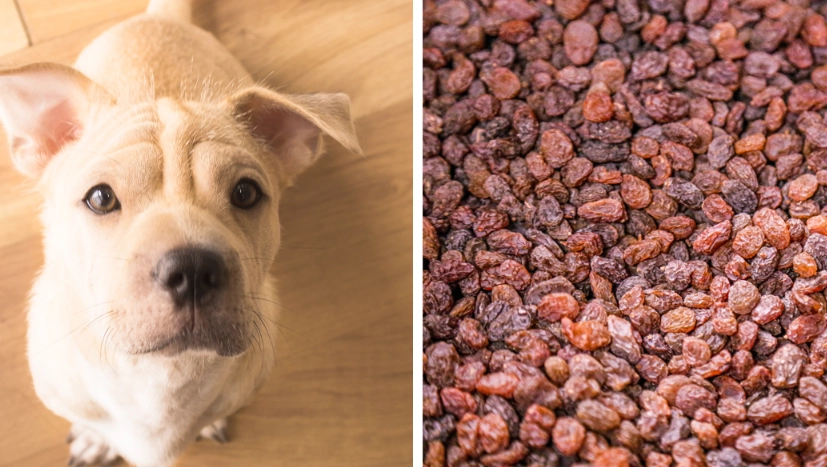
The Non-Negotiable Rule
Why on Earth Are Raisins So Dangerous for Dogs?

The Symptoms: What to Watch For If You're Worried
My Dog Ate a Raisin. What Do I Do NOW? (The Step-by-Step Action Plan)

Step 1: Don't Wait. Don't Google. Call.
Step 2: Follow Professional Instructions to the Letter
Step 3: Veterinary Treatment - What to Expect

A Quick Comparison: Raisins vs. Other Common Toxins
Substance
Toxic Principle
Known Toxic Dose?
Primary Danger
Raisins/Grapes
Unknown
NO. Unpredictable.
Acute Kidney Failure
Milk Chocolate
Theobromine
Yes (approx. 50-100mg/lb)
Cardiac, Neurological
Xylitol (Sweetener)
Insulin Release
Yes (very small amount)
Hypoglycemia, Liver Failure
Onions/Garlic
Thiosulfate
Yes (cumulative)
Hemolytic Anemia
Prevention is Everything: How to Make Your Home Safe

Safe & Tasty Alternatives
Your Burning Questions, Answered

What if my dog ate just one raisin?
Are grape juice, wine, or raisins in baked goods still toxic?
My dog ate raisins a year ago and was fine. Does that mean he's immune?
What about other fruits? Are blueberries or bananas safe?
How long do I need to monitor my dog after an incident?
Wrapping It Up: The Simple Takeaway